Understanding the Role of Arrest Icons in Modern Visual Communication
Visual communication plays a crucial role in conveying messages quickly and effectively across digital and print platforms. Among the many symbols used to represent law enforcement and legal actions, the arrest icon stands out as a powerful and recognizable visual cue. Whether used in infographics, templates, or web design, this monochrome symbol serves as a clear indicator of legal authority and procedural actions. In this article, we explore the characteristics, applications, and practical advantages of incorporating arrest icons into various design contexts.
What Makes an Arrest Icon Unique?
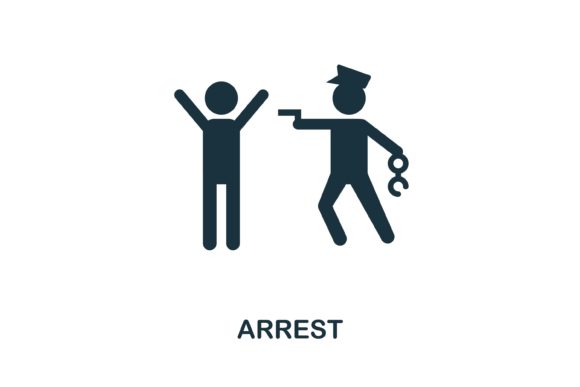
The arrest icon is typically a simplified, stylized illustration of a police-related action—often depicting a hand cuffing motion, a person being detained, or a symbolic representation of legal intervention. Its monochrome design allows for easy integration into a wide range of layouts without clashing with color schemes. As part of a broader police collection, the arrest icon is designed to be both informative and visually consistent with other law enforcement symbols.
One of the key features of this icon is its adaptability. Available in both EPS and JPG formats, it can be easily edited and resized for use in digital media or printed materials. Designers appreciate the flexibility of vector graphics, which maintain clarity at any scale, making the arrest icon suitable for everything from mobile app interfaces to large-format posters.
Applications Across Industries
The arrest icon finds relevance in a variety of professional and public-facing domains. Here are some of the most common use cases:
- Legal and Government Websites: Used to represent arrest procedures, legal rights, or law enforcement information.
- Educational Materials: Incorporated into classroom resources or online courses that teach about civic duties, law enforcement practices, or criminal justice systems.
- Infographics: Helps visually summarize data related to arrests, crime statistics, or police activity in a clear and accessible format.
- Mobile and Web Applications: Often used in law-related apps, such as those offering legal advice, emergency services, or citizen reporting tools.
- Corporate Compliance Training: Employed to illustrate legal procedures or workplace policies related to misconduct and disciplinary actions.
Design Considerations When Using Arrest Icons
When incorporating the arrest icon into a design project, it's important to consider both context and clarity. Since this symbol carries significant legal and social implications, its use should be intentional and respectful. Here are a few best practices:
- Ensure Relevance: Only use the icon in situations where it directly supports the message being conveyed, such as explaining legal procedures or illustrating law enforcement actions.
- Maintain Visual Consistency: If using other icons from the same police collection, ensure they share a similar style, scale, and line weight for a cohesive appearance.
- Provide Context: Always accompany the icon with explanatory text, especially in public-facing materials where clarity is essential.
- Respect Cultural Sensitivity: Be aware of how symbols related to arrest may be perceived differently across regions or communities.
Advantages of Using Arrest Icons in Digital Media
The adoption of visual symbols like the arrest icon has grown significantly in the digital age. Here are some of the key benefits that make these icons a valuable asset for designers and communicators:
- Improved User Experience: Icons help users quickly understand the function or meaning of a section without reading lengthy text.
- Enhanced Visual Hierarchy: By using a clear and recognizable symbol, designers can guide the viewer's attention effectively.
- Time and Cost Efficiency: Pre-designed icons like the arrest icon save time compared to creating original illustrations from scratch.
- Scalability: Vector formats like EPS allow the icon to be used across different platforms and resolutions without loss of quality.
- Professional Appearance: High-quality icons contribute to a polished and credible design, especially in official or educational contexts.
How to Access and Use Arrest Icons
Obtaining an arrest icon is a straightforward process, especially with the availability of digital design marketplaces and graphic resource platforms. Most providers offer the icon as part of a larger police or legal-themed collection, available for download in both EPS and JPG formats. The EPS file is ideal for editing and scaling in vector-based software like Adobe Illustrator, while the JPG version is suitable for quick placement in web or print designs.
Many designers prefer working with vector graphics because they allow for customization of colors, lines, and shapes. Even though the arrest icon is typically monochrome, slight adjustments can be made to match specific branding or design requirements. Additionally, these icons are often compatible with popular design tools such as Photoshop, Sketch, and Figma, ensuring seamless integration into existing workflows.
Real-World Examples of Arrest Icon Usage
Across the web and in print media, the arrest icon appears in a variety of contexts. Here are a few notable examples:
- Crime Statistics Dashboards: Municipal websites often use arrest icons to visualize data on crime rates, police activity, and community safety reports.
- Legal Information Portals: Online legal resources incorporate the icon to denote sections related to arrest records, bail procedures, or legal defense options.
- Public Service Announcements: Campaigns focused on law enforcement initiatives or public safety often use arrest icons to draw attention to their message.
- News Infographics: Media outlets use the icon to accompany stories about arrests, court proceedings, or law enforcement operations.
- Training Modules: Corporate compliance or law enforcement training programs use the icon to illustrate scenarios involving arrests or disciplinary actions.
Choosing the Right Arrest Icon for Your Project
When selecting an arrest icon from a design library or marketplace, it's important to evaluate several factors to ensure it meets your needs:
- Style: Choose an icon that matches the overall aesthetic of your design—whether minimalist, detailed, or abstract.
- Clarity: The icon should be instantly recognizable, even at smaller sizes.
- Licensing: Make sure the icon is available under a license that permits your intended use, especially for commercial projects.
- File Quality: Opt for vector formats (like EPS) whenever possible to ensure scalability and editability.
- Compatibility: Check that the icon works well with other design elements and tools you're using.
Conclusion
The arrest icon is more than just a visual symbol—it's a tool for clear and effective communication in legal, educational, and informational contexts. Its versatility, combined with the ease of access to high-quality files like EPS and JPG, makes it a valuable asset for designers, educators, and content creators alike. Whether used in a government portal, a mobile app, or a public awareness campaign, this monochrome icon helps convey important messages with precision and professionalism.